


5 a Day: What’s Behind the Fruit & Vegetable Recommendation?
The “5 a day” recommendation is familiar to many, but only few know where it comes from, what it really means – and how it can be integrated into daily life. In this article, we take a factual look at its origins, background, and practical tips for implementation.
1. What does “5 a day” mean?
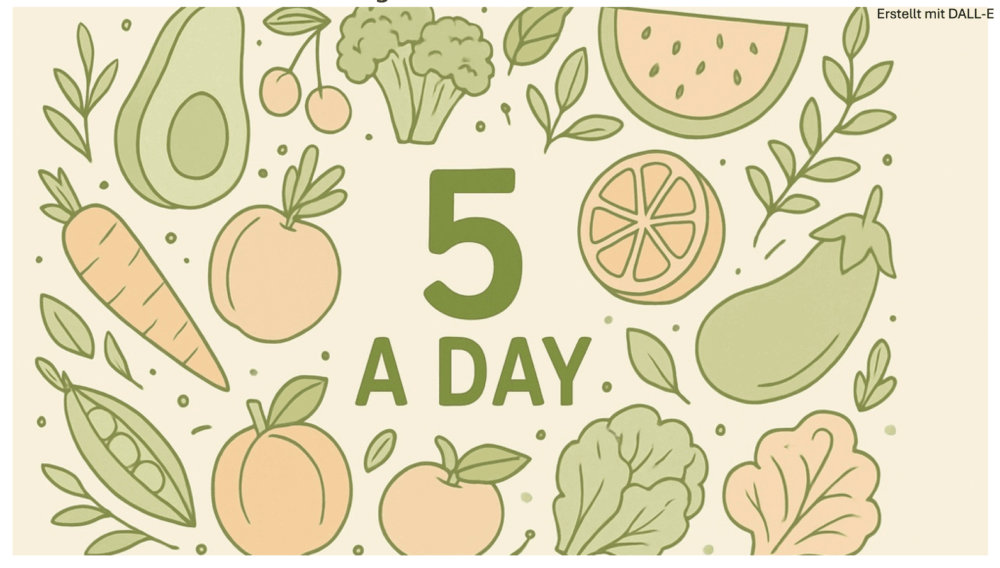
“5 a day” is a simple recommendation: Eat five servings of fruits and vegetables every day. This includes fresh produce, as well as cooked or frozen vegetables, legumes, and – in moderation – juices and dried fruit.
One serving equals roughly one handful – making it individually adaptable.
- 🥦 3 servings of vegetables
- 🍎 2 servings of fruit
2. Where does the recommendation come from?
The “5 a day” campaign was launched in the early 1990s in the USA and later adopted by international organizations such as the World Health Organization (WHO). In Germany, it has been promoted since 2000 by the initiative of the same name, with the goal of raising awareness for plant-based variety in everyday nutrition.
The focus is on a plant-forward lifestyle, without being moralizing or prescriptive.
3. How to apply it in everyday life?
In a busy daily routine, reaching this goal can feel challenging. But there are simple ways to make it work:
- 🍌 Fruit to go (e.g. apples, bananas, berries)
- 🥕 Vegetables as snacks (e.g. bell pepper, cucumber, carrots)
- 🍲 Smart side dishes (e.g. lentils, broccoli, zucchini)
- 🥤 Smoothies or soups with vegetable content
- 🛒 Eat seasonally: Regional produce not only tastes better – it’s usually fresher too
4. And if it doesn’t always work out?
It’s completely normal not to hit the five servings every single day. What matters is the overall direction, not perfection.
On days when it’s hard to get enough fruits and vegetables, you can still include essential nutrients – especially dietary fiber – through other sources like whole grains, legumes, or select foods with functional value.
5. UNE FOODS: Naturally high in fiber
Our protein-rich tomato-cheddar bread mix and our PRO-FI protein-fiber pizza dough mix are designed to support those who want to eat more consciously.
With a particularly high fiber content from natural sources like inulin, oat fiber, and acacia fiber, they help improve daily fiber intake – without added sugar or unnecessary additives.
These baking mixes are not a replacement for fresh fruits or vegetables, but they can be a valuable addition – especially on days when “5 a day” feels out of reach.
Conclusion: Mindful, not perfect
“5 a day” is a helpful guideline for a plant-rich diet. Not every day will look the same – and that’s okay. What matters is a good rhythm and balanced variety.
Those who integrate naturally fiber-rich alternatives into their routine create a meaningful balance – without pressure.
This article is for informational purposes only and does not replace medical advice.
You may also like

Why Collagen + Inulin & Cocoa Fibers Are a Well-Thought-Out Combination
Collagen with Fiber is a rare combination on the German market – most brands sell…
Protein Bread: What Is It – and What Should You Look Out For?
In this guide you will learn what protein bread is, how it differs from classic bread,…
Oats and Low Carb: How Useful Are Oats Really?
In this guide, you will learn how many carbohydrates oats contain, whether they fit into…