
'/%3E%3C/svg%3E)

'/%3E%3Cpath%20fill='%23b2b2b2'%20d='M241%20382q0%2016%2017%2026%2017%2011%2042%2011t42-11q16-11%2017-26V269H241'/%3E%3Cpath%20fill='%239f7e00'%20d='M241%20379q0%2014%208%2023%209%209%2021%209%2014%200%2021-9%209-9%209-23V269h-59'/%3E%3Cpath%20d='M241%20339v-70h59v110q0%2014-9%2023l-6%205v-68h-15v72q-8%200-14-4v-68zm59%2040c0%2022%2015%2032%2029%2032%2021%200%2030-18%2030-32v-40h-59'/%3E%3Cpath%20fill='%239f7e00'%20d='M266%20277v5h2v12h-3v-5h2v-5h-9v5h2v5h-4v9h3v18h-5v10h34v-10h-5v-18h3v-9h-4v-5h2v-5h-9v5h2v5h-3v-12h2v-5zm42%20101q0%2010%206%2017%206%206%2015%207%2010-1%2016-7%206-7%206-17v-29h-43'/%3E%3Ccircle%20fill='%230044ad'%20cx='329.5'%20cy='372'%20r='6'/%3E%3Cellipse%20fill='%230044ad'%20cx='300'%20cy='340'%20rx='16'%20ry='21'/%3E%3C/svg%3E)
'/%3E%3C/g%3E%3Cuse%20href='%23c'%20transform='matrix(-1%200%200%201%20720%200)'/%3E%3C/svg%3E)
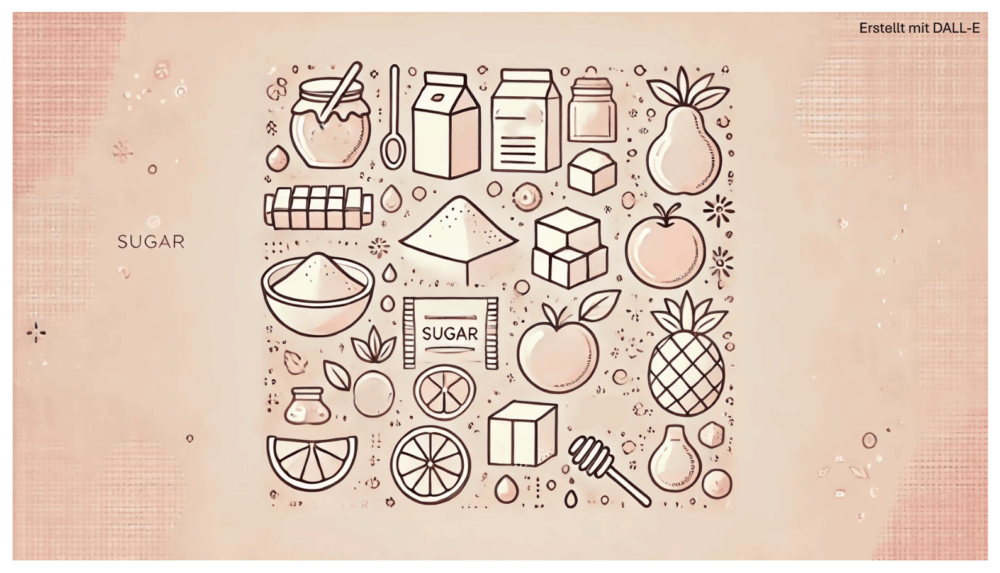
What Is Sugar?
What is sugar?
Sugar is a natural component of many foods and belongs to the group of carbohydrates. From a chemical perspective, it consists of simple or compound sugar structures that occur in numerous plant-based and animal-based foods.
Sugar can be naturally present in foods as well as added to them.
Types of sugar
There are different types of sugar, which differ in their chemical structure.
Simple sugars (monosaccharides)
- Glucose (dextrose)
- Fructose (fruit sugar)
- Galactose
Double sugars (disaccharides)
- Sucrose (table sugar)
- Lactose (milk sugar)
- Maltose (malt sugar)
Complex sugars and dietary fiber
These include, among others:
- Starch
- Inulin
- other complex carbohydrate structures.
💡 Did you know? Sugar can appear in ingredient lists under many different names – including, for example, dextrose, glucose-fructose syrup, maltodextrin or corn syrup.
Where does sugar occur?
Sugar is a component of many foods – both naturally and in added form.
Naturally present in:
- Fruit
- Vegetables
- Dairy products
- Honey
Frequently added to:
- Confectionery
- Soft drinks
- Desserts
- Baked goods
- processed foods.
Products such as mueslis, yoghurts, sauces or breakfast bars can also contain added sugar.
Are there differences between natural and added sugar?
Foods such as fruit or vegetables usually contain sugar in combination with other components such as dietary fiber or other natural constituents.
Added sugar, on the other hand, is often used to give foods sweetness or certain technological properties.
💡 Note: Whole fruits differ considerably in their composition from isolated sugar sources or highly processed products.
Putting sugar into perspective
Sugar is a component of many diets and foods. What often matters is not a single ingredient, but the overall diet and the composition of meals.
That is why many people increasingly pay attention to:
- ingredient lists
- the degree of processing of foods
- as well as a balanced and varied diet.
The UNE Foods approach
UNE Foods develops protein- and fiber-rich recipes with clean-label-oriented ingredients and practical everyday use.
Our baking mixes contain no added sugar and no sugar alcohols.
The focus is on:
- selected ingredients
- protein- and fiber-rich recipes
- as few highly processed components as possible
- and uncomplicated integration into everyday life.
👉 Discover our functional baking mixes:
- 🍕 Premium PRO-FI Protein-Fiber Pizza Dough
- 🍞 PRO-FI Protein Bread Tomato-Cheddar
Note: This article is for information purposes only and does not replace medical advice.
You may also like

Why Collagen + Inulin & Cocoa Fibers Are a Well-Thought-Out Combination
Collagen with Fiber is a rare combination on the German market – most brands sell…
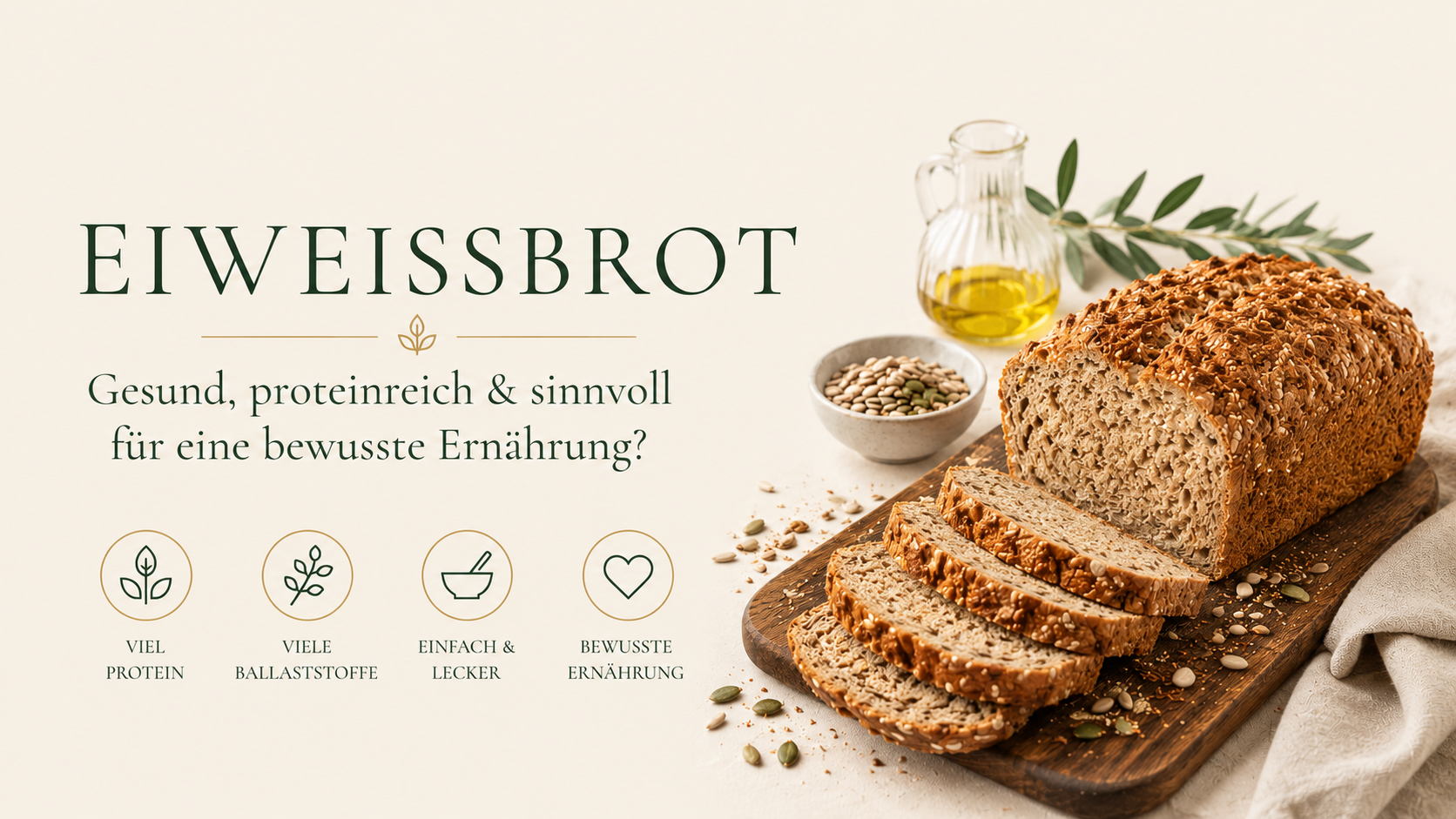
Protein Bread: What Is It – and What Should You Look Out For?
In this guide you will learn what protein bread is, how it differs from classic bread,…
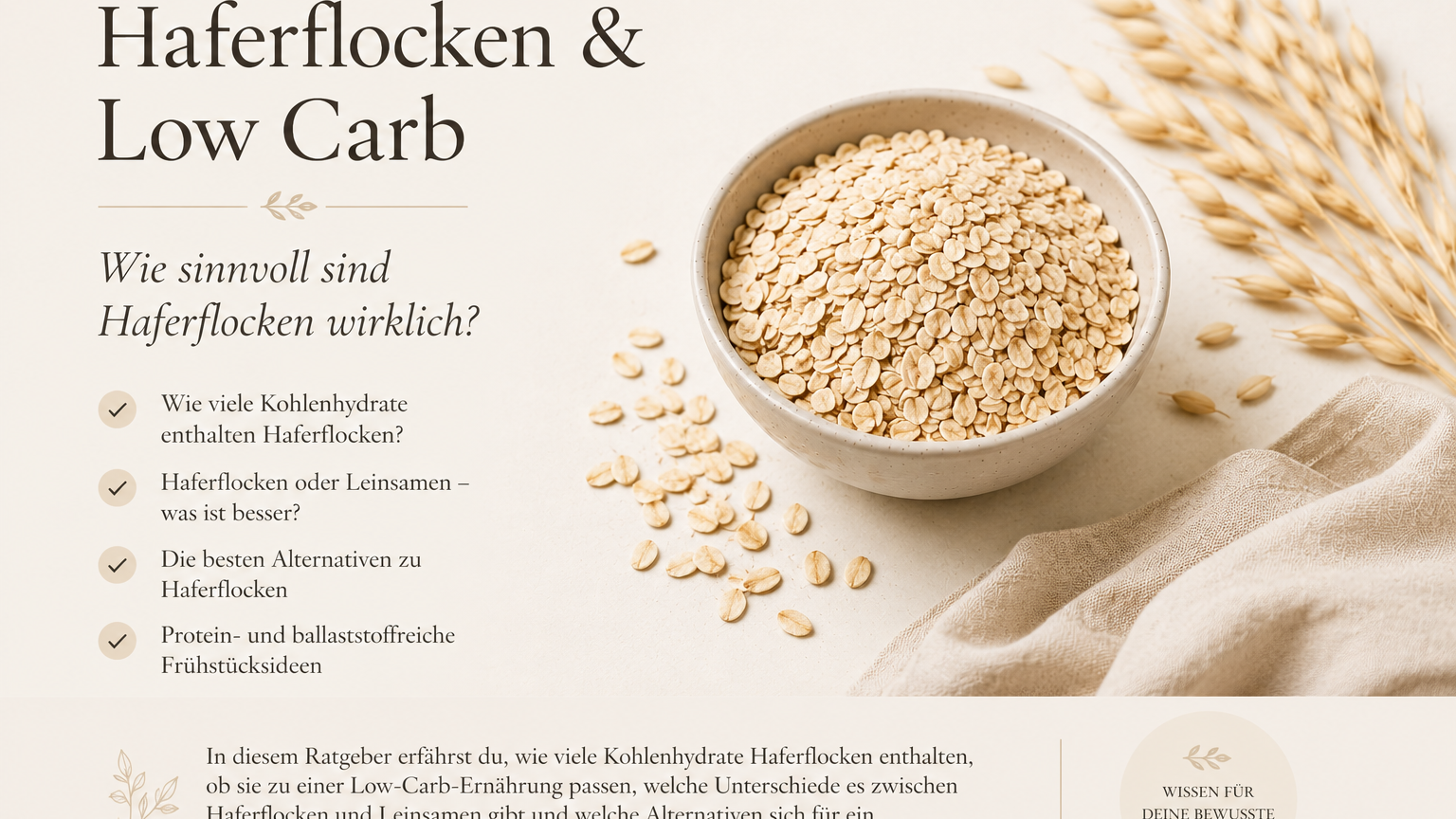
Oats and Low Carb: How Useful Are Oats Really?
In this guide, you will learn how many carbohydrates oats contain, whether they fit into…