

Collagen: Why Production Declines After Age 25 – and What You Can Do
What Is Collagen – and Why Is It So Important?
Collagen is the most abundant structural protein in the human body, making up about one-third of all protein mass. It forms the scaffolding that supports skin, bones, tendons, and connective tissue. In simple terms: collagen is the body’s natural support system – essential for elasticity, firmness, and structural integrity.
There are several collagen types, but Type I and Type III are the most prevalent in skin, hair, nails, and bones. Over time, the body’s ability to synthesize these proteins naturally declines – a process that is both gradual and inevitable.
The Natural Decline: What Happens After 25?
Starting around the age of 25, the body gradually produces about 1% less collagen each year. This might seem small, but the effects accumulate. Around the late 30s and 40s, the loss becomes visible:
-
Skin elasticity and hydration decrease
-
Fine lines and wrinkles become more pronounced
-
Joints may feel stiffer or less flexible
-
Connective tissue becomes weaker and slower to repair
Certain lifestyle factors can accelerate collagen degradation, including UV exposure, chronic stress, smoking, sleep deprivation, and a high-sugar diet. Excess sugar binds to collagen fibers through a process called glycation, making them brittle – a little-known but fascinating fact that explains why sugar ages the skin faster.
Can You Support Collagen Naturally?
Yes – through a combination of targeted nutrition, protective habits, and functional supplementation.
Nutrients such as vitamin C (which stimulates natural collagen synthesis), zinc, folic acid, MSM, and hyaluronic acid all play synergistic roles in collagen formation and tissue repair.
Equally important are fibers, which support a healthy gut microbiome – essential for nutrient absorption and metabolic balance. Research now shows that the gut-skin axis plays a significant role in maintaining youthful, resilient skin.
Our Solution: Collagen Meets Fiber & Micronutrients
At UNE FOODS, science and clean nutrition meet taste. Our Premium Collagen Hydrolysate with Fiber (Chocolate) was developed as a functional 3-in-1 blend that combines clinically studied, highly bioavailable Type I & III collagen peptides with vitamins, minerals, and plant fibers for comprehensive nourishment.
- Collagen Types I & III
- Fiber from cacao fibers, inulin & cocoa
- highly bioavailable, clinically studied collagen peptides Type I and III
- Enriched with vitamin C, zinc, folic acid, MSM & hyaluronic acid and more
- No added sugar & no sugar alcohols
- Versatile use: in shakes, breakfast, cakes or simply in milk or water
Collagen production naturally slows with age – but with mindful nutrition and science-backed formulations, it can be effectively supported.
At UNE FOODS, we believe longevity starts at the cellular level: nutrition that truly nourishes, not just fills.
✨ Discover our 3-in-1 collagen formula
Collagen hydrolysate with fiber, vitamins & minerals – a smart way to support your daily routine.
Disclaimer:
This article is for informational purposes only and does not replace medical advice.
You may also like
Fibermaxxing: Why Dietary Fiber Is Trending Right Now – and How UNE Foods Makes It Easy for Everyday Life
More Fiber in everyday life – without complicated routines, without extra products and…
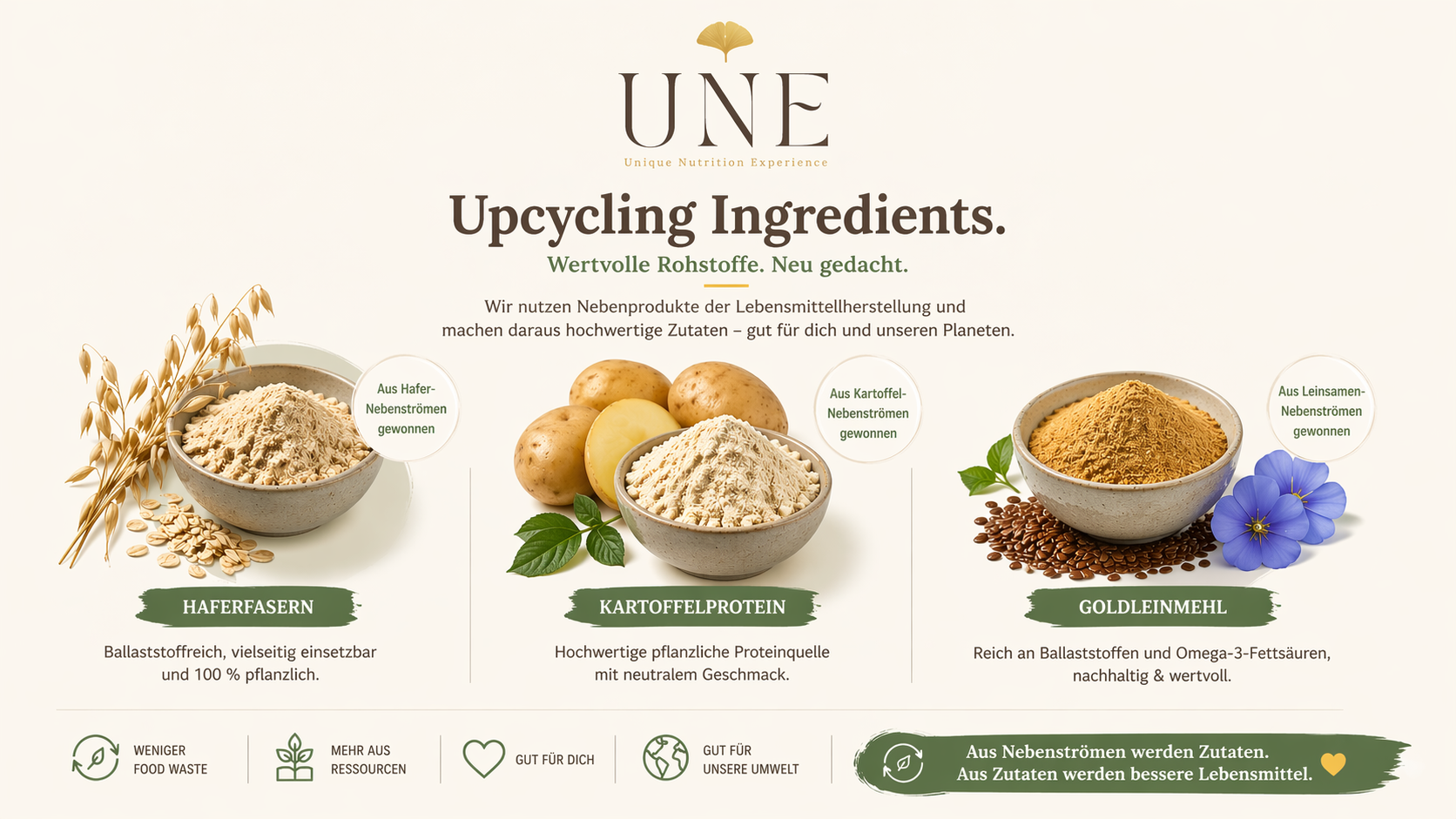
Upcycling in food: what is behind it – and why it is becoming relevant
Upcycling in food: what is behind it – and why it is becoming relevant More and more food…
Why Collagen Cannot Be Fully Understood Without the Gut
Collagen alone is not enough – and this is where the misconception lies We often think…