'/%3E%3C/svg%3E)

'/%3E%3Cpath%20fill='%23b2b2b2'%20d='M241%20382q0%2016%2017%2026%2017%2011%2042%2011t42-11q16-11%2017-26V269H241'/%3E%3Cpath%20fill='%239f7e00'%20d='M241%20379q0%2014%208%2023%209%209%2021%209%2014%200%2021-9%209-9%209-23V269h-59'/%3E%3Cpath%20d='M241%20339v-70h59v110q0%2014-9%2023l-6%205v-68h-15v72q-8%200-14-4v-68zm59%2040c0%2022%2015%2032%2029%2032%2021%200%2030-18%2030-32v-40h-59'/%3E%3Cpath%20fill='%239f7e00'%20d='M266%20277v5h2v12h-3v-5h2v-5h-9v5h2v5h-4v9h3v18h-5v10h34v-10h-5v-18h3v-9h-4v-5h2v-5h-9v5h2v5h-3v-12h2v-5zm42%20101q0%2010%206%2017%206%206%2015%207%2010-1%2016-7%206-7%206-17v-29h-43'/%3E%3Ccircle%20fill='%230044ad'%20cx='329.5'%20cy='372'%20r='6'/%3E%3Cellipse%20fill='%230044ad'%20cx='300'%20cy='340'%20rx='16'%20ry='21'/%3E%3C/svg%3E)
'/%3E%3C/g%3E%3Cuse%20href='%23c'%20transform='matrix(-1%200%200%201%20720%200)'/%3E%3C/svg%3E)
What Is Pescetarianism?
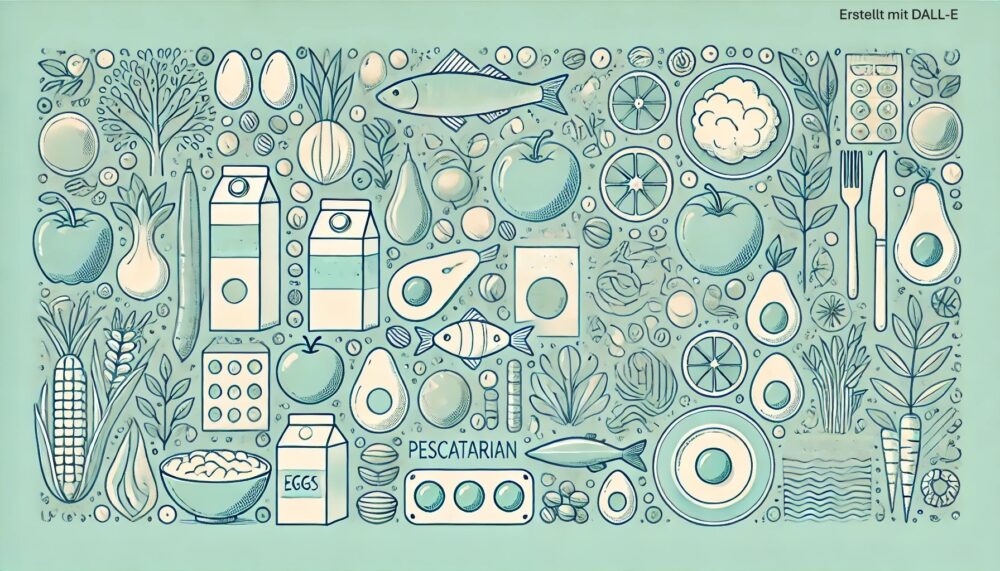
Pescetarianism is a way of eating in which meat is avoided, while fish and seafood remain part of the menu. In addition, plant-based foods as well as products such as milk and eggs are often included.
Many people choose this way of eating because they want to combine plant-focused meals with fish and other protein sources.
Which foods are included?
Pescetarians often consume a varied selection of foods:
Plant-based foods
- fruit
- vegetables
- pulses
- wholegrain products
- nuts
- seeds
Animal products
- milk
- cheese
- yoghurt
- eggs
Fish & seafood
- salmon
- tuna
- prawns
- mussels
Plant-based alternatives
- tofu
- seitan
- lupin products
Possible characteristics of pescetarianism
- ✅ high proportion of plant-based foods
- ✅ fish as a complementary protein source
- ✅ can be flexibly integrated into different ways of eating
Challenges of pescetarianism
- ⚠️ conscious selection of fish and seafood
- ⚠️ varied meal planning
- ⚠️ taking individual eating habits into account
Who is pescetarianism suitable for?
Pescetarianism is suitable for people who want to reduce or give up their meat consumption but still want to include fish in their diet.
This way of eating can be shaped individually and flexibly adapted to different lifestyles.
Conclusion: plant-focused with fish as a complement
Pescetarianism combines a plant-focused diet with fish and seafood as complementary parts of the menu.
As with many ways of eating, variety, individual needs and a balanced selection of foods play an important role.
Tips for everyday life
Many people consciously pay attention in their diet to:
- fiber-rich foods
- protein sources
- and meals that are as varied as possible.
Good matches include, for example:
Note: This article is for information purposes only and does not replace medical advice.
You may also like
Sugar – the silent saboteur of our brain
New research is increasingly examining the connection between nutrition, wellbeing and…
Sugar – The Silent Saboteur of Our Brain | UNE FOODS
Sugar affects far more than just blood glucose levels – it shapes how our brain thinks,…
Chips or Broccoli? Why Your Body Judges Calories Differently
Chips or Broccoli? Why Your Body Judges Calories Differently Calories indicate how much…